Reconciliation & Transaction Matching
Systems that ingest bank, payment, ledger, or platform activity, normalize it, propose matches and classifications, and surface unresolved differences with evidence attached.
The operational problem
A multi-entity portfolio where bank activity, platform records, and the ledger each tell a slightly different story, and month-end means finding out why, entity by entity.
Why the existing process failed
Line-by-line manual matching consumes days and still misses duplicates, transfers, and small systematic differences. Institutional knowledge, not the system, held the matching logic.
What was built
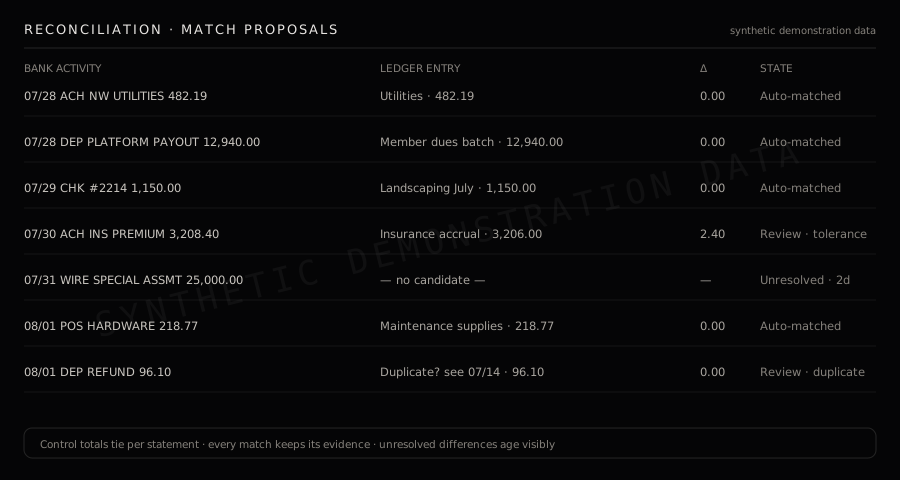
Reconciliation tooling that ingests bank statements and platform activity, normalizes merchants and formats, proposes matches within configurable tolerances, detects duplicates, surfaces unresolved differences in a review queue, and ties results back to the ledger with the supporting evidence preserved.
What the system automates, calculates, and controls
Ingestion, normalization, match proposal, duplicate detection, difference aging, and source-to-ledger tie-outs.
Where human judgment remains
Every proposed match above a materiality threshold is reviewable; unresolved differences are decided by a person, with the evidence in front of them.
How correctness was tested
Control totals on every ingestion, and reconciliation output compared against independently sourced balance and activity records for the same periods.
What changed
Reconciliation across the portfolio became a supported, repeatable process with evidence attached, currently operating across more than twenty associations.
Disclosure
Client engagement in ongoing operation; client names withheld. The supported-association count is maintained in the project data and subject to the owner’s periodic confirmation.
- Bank + platform
- Normalization
- Match proposals
- Review queue
- Ledger tie-out
- Evidence store
Engineering and research context
- Anomaly detection Considered during system design
Technologies used
Related capability: Data, ERP & Finance Systems